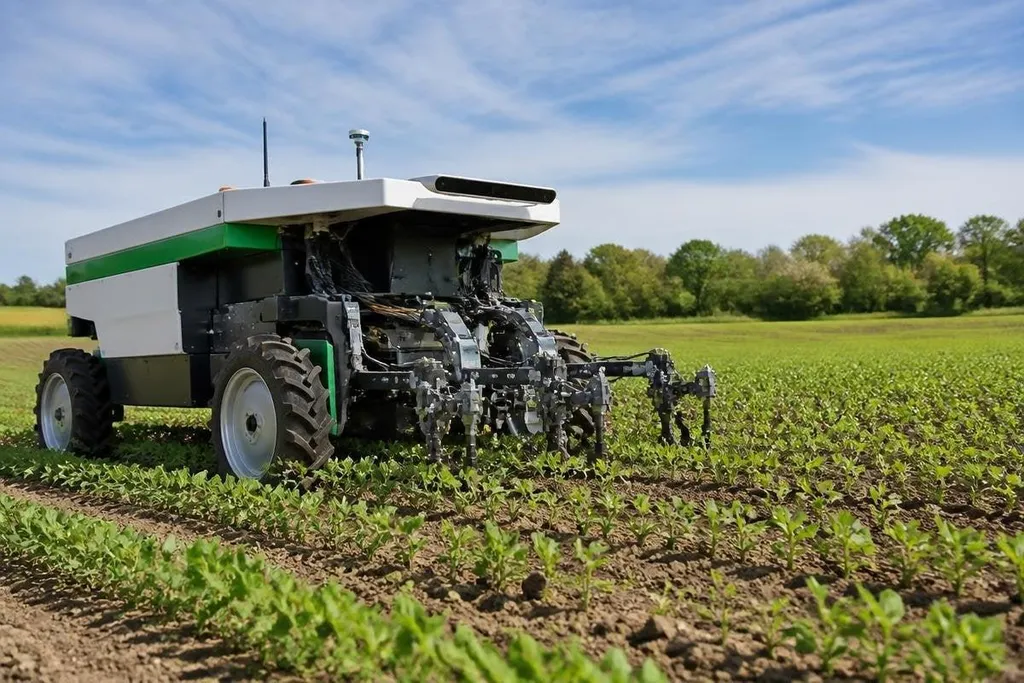
A weeding robot has one job that sounds easy until it reaches a real field: find the weed, leave the crop, and remove the unwanted plant. The machines now being built combine cameras, software, and farm tools, but their value depends on how well those parts work together outside a controlled test.
- Crop rows must be easy for the robot to read.
- Weed removal can mean cutting, pulling, or targeted spraying.
- Field trials matter more than polished demonstration videos.
The machine has to tell plants apart
The first task is plant detection. A camera system can read differences in color, shape, and position, then mark a plant as crop or weed. That decision has to hold as light changes, soil moves, leaves overlap, and weeds grow at different stages.
The robot also needs a way to keep its position. Some designs may use cameras and wheel movement to follow rows. Others can add satellite positioning, LiDAR, or other sensors that measure the space around the machine. The method matters because a small position error can damage a crop when the tool passes close to its stem.
A farm with straight, evenly spaced rows gives the software an easier task. Fields with slopes, gaps, muddy ground, or mixed crops demand more from the robot before it can work without close supervision.
Removal is harder than detection
Spotting a weed does not remove it. The robot needs an end effector, meaning the tool that touches the plant, and that tool has to match the crop and soil.
A blade can cut weeds between rows. A narrow hoe can disturb soil near the crop. A gripper can pull a plant, but it may need a clear view and enough force to remove the root. Targeted spray systems use less chemical than broad spraying, but they still need accurate plant detection and careful control.
The tool also has to move at a useful speed. Slow work may protect crops but fail to cover enough land for the farm. Fast work may leave weeds behind or strike plants.
The right measure is not the robot’s top travel speed. It is the number of cleanly treated rows it can complete during a normal work period.
Why field conditions decide the result
A robot that works on dry, level soil may behave differently after rain. Mud can change wheel traction and cover sensors. Dust can reduce image quality. Plant leaves can hide weeds from the camera, and crop rows can become harder to follow as the season develops.
These limits affect the farm’s daily work. Someone may need to inspect the robot, clear blocked tools, move it between fields, or correct a missed row. A system that needs frequent help may fit a research trial but fail to reduce labor on a working farm.
A field trial needs more than a row count. Reports on weeding robots from Robot24.com can tie each claim to the crop, soil, test date, tool setting, and human work left after the pass. Those facts give you a better way to read the short videos that follow.
Public claims also need careful reading. A short video can show a successful pass without showing setup time, failed detections, charging, transport, or the number of plants damaged. Those missing details can decide the purchase.
What a buyer should check
If you are comparing a weeding robot for a farm, ask for evidence in these areas:
- Crop fit: Which crops and row spacings has the system handled?
- Removal method: Does it cut, pull, hoe, or spray, and what happens when the weed is partly hidden?
- Work rate: How many rows or acres can it treat during a normal operating period?
- Human input: Who checks the robot, clears faults, and moves it between fields?
- Field limits: What soil, slope, weather, and plant sizes stop the system from working?
- Cost record: Does the quoted price include tools, software, service, transport, and training?
I'd judge a weeding robot by its missed weeds and damaged crops over a full field trial, not by its smoothest video clip.
What happens next
The next useful proof will come from repeated field work across crop types and weather conditions. Makers that publish detection errors, repair time, treatment speed, and crop damage will give farms enough detail to compare machines on work rather than promise.
Until those records are common, the safer buying question is narrow: can this robot treat your crop, in your soil, at a pace your farm can use?